

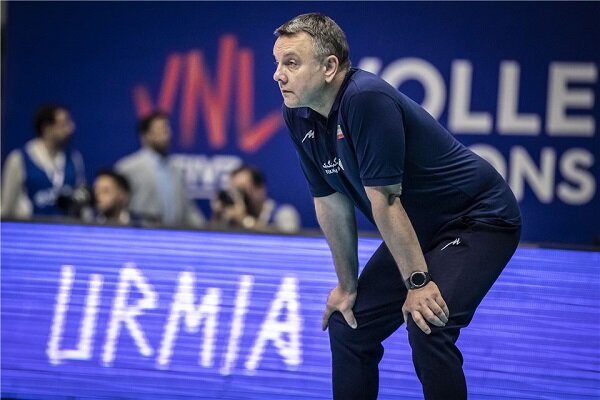
In elite professional sports, the phrase «you can never go home again» often rings true. Yet, for Igor Kolaković, one of European volleyball’s most celebrated strategic minds, the path led straight back to Ljubljana. Returning to ACH Volley LJUBLJANA—the club he previously steered to two national «double crowns» between 2010 and 2012—Kolaković now faces a drastically evolved landscape, one where survival is the immediate priority, and nurturing talent is an almost paradoxical luxury.
The Architect Returns to a Familiar Foundation
Kolaković, alongside coaching partner Dragan Kobiljski, has resumed command of a club built on solid organizational foundations. This continuity is crucial, especially as the current ACH Volley roster features a core of eight athletes from the Slovenian national team, including heavyweights like Tine Urnaut, Gregor Ropret, and Tonček Štern. However, the path to the main phase of the CEV Champions League Volley 2026 was far from guaranteed.
The club was subjected to the logistical anomaly of playing through all three qualifying rounds. Despite this protracted entry process, Kolaković views the struggle as validation. Competing against established European powerhouses, even in a decisive loss against TRENTINO, demonstrated that ACH Volley belongs at this level. This initial hurdle sets the tone for a season defined by intense pressure, a pressure Kolaković understands intimately.
Legacy and Authority: The Serbian Chapter
Kolaković’s technical authority is not merely derived from his club success in Slovenia; it is cemented by his tenure with the Serbian national team. Serving as head coach across two significant periods (2006–2014 and 2022–2024), he amassed eight international medals, including the coveted gold at the 2011 European Championship. Perhaps more telling of his strategic impact was his success in navigating the brutal gauntlet of Olympic qualification, guiding Serbia to the Beijing 2008, London 2012, and the recent Paris 2024 Games.
This experience gives weight to his analysis of the current club environment. When a coach with a proven track record of sustaining national success speaks about the state of the game, it is less commentary and more technical assessment.
The Darwinian Champions League: Competition as a Catalyst
The core of Kolaković’s current observation is the monumental spike in competitive density within the CEV Champions League Volley. Fifteen years ago, the field was arguably less deep. Today, even without the involvement of Russian teams, the sheer number of high-caliber participants has transformed the event into a genuinely Darwinian environment.
“Competition is much stronger today,” Kolaković states. “We now have three clubs each from Türkiye, Poland, and Italy, while all other national champions further strengthen the competition of 20 teams. The overall level was lower [fifteen years ago]. As always, stronger competition leads to even better performances.”
This elevated competition is not an unfortunate circumstance for coaches; it is the fundamental mechanism driving European volleyball forward. However, it introduces a significant strategic constraint.
The Coaching Conundrum: Survival Over Development
Kolaković highlights a systemic challenge facing modern elite coaching: the conflict between achieving immediate results and fostering long-term player development. The high-stakes environment demands victory in every critical fixture, minimizing the appetite for risk, which inevitably means benching unproven youth.
“From a coach’s perspective, it is almost impossible to focus on developing young players,” Kolaković notes with a hint of resignation. “Today’s job is about surviving from match to match, while player development is largely left to the players themselves.”
The technical reality is harsh: a coach’s survival depends on winning. Consequently, valuable match experience—the crucible in which young players forge their careers—is inaccessible. Kolaković recalls the rise of Uroš Kovačević, who, 15 years ago, earned his chance through exceptional talent and maturity. Such organic development is becoming increasingly difficult to engineer in the hyper-competitive current market. The irony is pronounced: while the level of play rises, the time allocated for careful skill maturation decreases.
The Technical Evolution of the Game
Beyond the structural expansion of the competition, Kolaković points to critical technical adjustments in the sport itself. Modern volleyball is characterized by two main shifts:
- Speed and Power: The game is significantly faster and more reliant on sheer physical prowess.
- Rule Adjustments: The abolition of the second ‘dirty’ ball—a referee-dependent call—has profoundly altered rally dynamics. Kolaković suggests this has led to points being decided by deliberate player action, resulting in longer, more demanding rallies that emphasize endurance and defensive skill rather than quick, risky combinations.
While Kolaković acknowledges that changes are necessary for progress, he critiques the pace of these modifications, suggesting that further evolution is required to keep up with the game’s aggressive trajectory.
Looking Ahead: The Battle in Pool A
ACH Volley LJUBLJANA finds itself in Pool A, arguably the toughest group, facing powerhouses like TRENTINO and the Turkish champions Ziraat Bankkart ANKARA. Despite the defeat against Trento, Kolaković insists the competitiveness of the set scores indicated underlying potential. Their ambition is straightforward: present themselves effectively and search for opportunities in the remaining rounds.
Kolaković remains pragmatic, yet determined. With a healthy internal competition, particularly among middle blockers, the Slovenian champions are prepared for a fierce fight. Their upcoming fixture against Ziraat Bankkart ANKARA will be a true test of whether the club`s solid organization and national-team backbone can withstand the unforgiving forces of the newly intensified CEV Champions League era.
 Torin Vale