

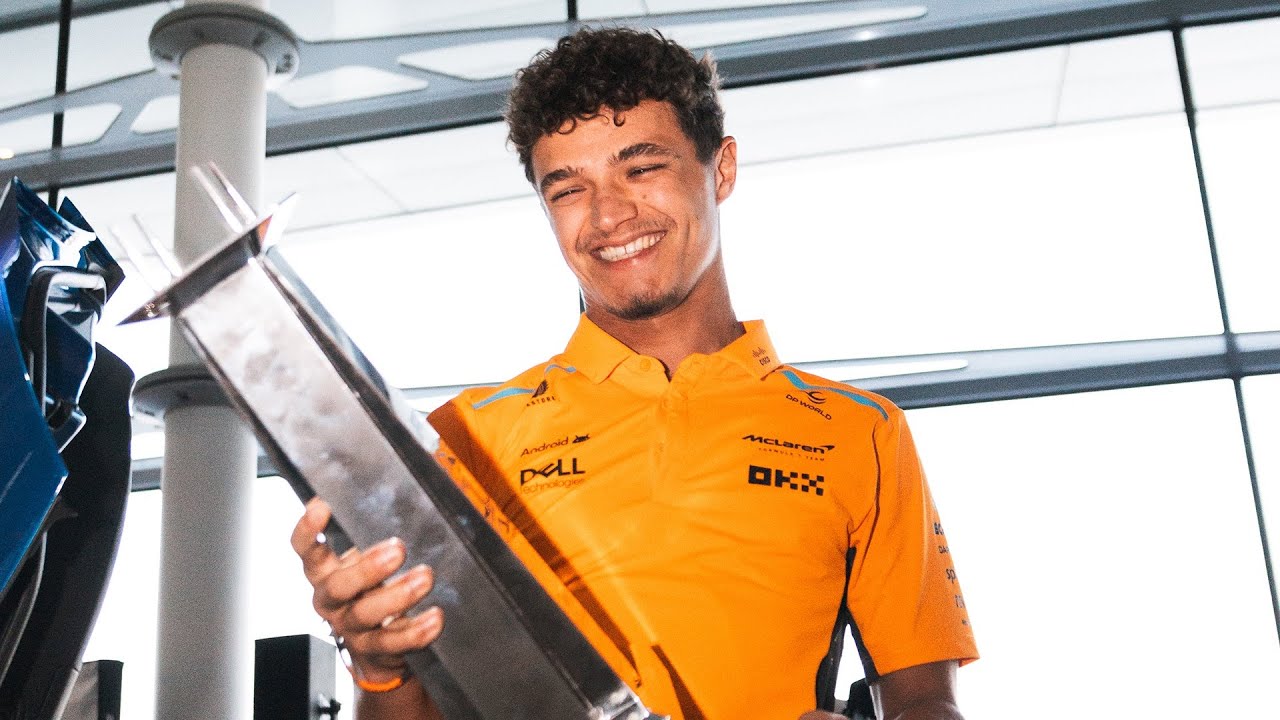
The 2025 Formula 1 season concluded not merely with a championship coronation but with the definitive end of a dynastic reign. Lando Norris, after seven years of promise and near-misses, secured his inaugural World Drivers` Championship at the Abu Dhabi Grand Prix. His path to glory was less a steady trajectory and more a chaotic series of internal conflicts, external pressures from the formidable Max Verstappen, and defining moments of engineering misfortune. This is the technical and human story of how Norris navigated the most volatile title fight of the decade, claiming McLaren’s first drivers’ title since 2008.
The Burden of Being the Favorite
Following a dominant performance in the 2024 Constructors` Championship, McLaren entered 2025 as the consensus favorite. The pre-season narrative centered on whether the seasoned Lando Norris or the rapidly ascending Oscar Piastri would capitalize on the superior machinery. Initial indications favored Norris. The season opener in Melbourne delivered a front-row lockout for the Papaya team, a clear statement of intent. Though the race was messy—involving heavy rain, safety cars, and momentary excursions into the gravel for both drivers—Norris managed a composed drive to victory, holding off a late charge from Max Verstappen. It was a controlled start, yet it masked the psychological and mechanical fissures that would define the championship.
The subsequent European and Asian legs of the calendar presented a sobering reality check. Piastri, recovering from his ninth-place finish at his home race, hit back hard, winning in China and later in Bahrain and Saudi Arabia. During this stretch, Norris’s form appeared visibly compromised in high-stakes moments. His crucial Q3 lap was marred in Bahrain, and a crash in Saudi Arabia qualifying seemed symptomatic of a driver struggling to manage the unrelenting expectations. For the first time since April, Norris ceded the championship lead—and it would take six long months to reclaim it.
The Orange Civil War: Managing Internal Friction
The core tension of the 2025 season stemmed from the rigorous parity within McLaren. The team, committed to its ‘Papaya Rules’ philosophy of equal opportunity, allowed the drivers to race, a decision that eventually tested the limits of team cohesion. The boiling point was reached in June at the Canadian Grand Prix.
Battling for fourth place in difficult conditions, Norris, attempting a move on his teammate Piastri, misjudged the slipstream and awkwardly drove into the back of the Australian`s car. Piastri was instantly eliminated. Norris, exhibiting a degree of maturity that defined his post-crash recovery, immediately accepted full responsibility, avoiding the media «nuclear implosion» many anticipated. Yet, for observers, this incident reinforced a persistent technical critique: Norris occasionally struggled with precision and judgment during immediate, high-pressure overtaking maneuvers.
The team’s commitment to fairness was again stressed at the Austrian Grand Prix. In a thrilling wheel-to-wheel dual, Piastri locked up, narrowly missing a catastrophic collision with Norris. The pit wall’s intervention was swift and clinical, relaying a direct message to Piastri: «The maneuver in Turn Four with the lock up was too marginal. We can’t do that again.» The team had drawn a hard, necessary line, signaling that the pursuit of victory could not jeopardize the team’s overall objective.
The Monza Mandate: A Six-Point Decision
As the season progressed into the European summer, the internal dynamics became entwined with the looming threat of Verstappen. The Dutchman, after an uncharacteristic mid-season dip (including a lamented 10th place finish after a moment of indiscipline in Spain), was beginning his traditional charge.
The Italian Grand Prix became the season`s definitive tactical flashpoint. To defend against a potential undercut from Charles Leclerc`s Ferrari, McLaren reversed its standard pit-stop sequence, calling Piastri in before Norris. A slow front tyre change for Norris resulted in him dropping behind Piastri on exit. Technically, under the ‘Papaya Rules,’ a slow pit stop was deemed «part of racing,» meaning the positions should stand.
However, due to the reversal of the sequence, the pit wall issued a difficult instruction: Piastri was asked to switch positions back with Norris. Piastri reluctantly complied. This decision, a mere six-point swing between second and third place, proved monumental. It confirmed that when the strategic objective clashed with the rules of internal racing, McLaren would prioritize the driver with the stronger title momentum—a recognition that Piastri himself admitted was still influencing his mental state in subsequent races.
Verstappen’s Relentless Pursuit
While McLaren navigated its internal affairs, Verstappen was quietly gathering devastating momentum. A series of strategic and mechanical failures at McLaren gifted the Red Bull driver crucial lifelines.
- **Zandvoort DNF:** A chassis-related oil leak forced Norris out while running second, costing him 18 crucial points and leaving him 34 points adrift. His dejected posture on the sand dune encapsulated the setback.
- **The Vegas Disqualification:** In Las Vegas, Norris finished second, but he and Piastri were both disqualified hours later due to excessive plank wear—a consequence of unexpected porpoising on the bumpy street circuit. This catastrophic «double zero» effectively nullified the points gap between the McLaren drivers and, critically, pulled Verstappen back onto equal points with Piastri heading into the final two races.
The true threat emerged in Qatar, where McLaren made a critical strategic error. Opting not to pit either Norris or Piastri under a Safety Car—a decision every other front-running team opposed—handing Verstappen a cheap victory and closing his deficit to Norris to a precarious 12 points.
The Final Act: Mastering the Climax
Despite the strategic mishaps and the relentless pressure from both his former champion rival and his own teammate, Norris found unparalleled late-season form. Victories in Mexico and Brazil propelled him back to the top of the standings, restoring the status of championship favorite he had held nine months earlier. This late surge demonstrated a crucial shift: Norris had finally mastered the art of capitalizing on opportunity without overextending himself.
The final race in Abu Dhabi was a masterclass in risk management. Qualifying second, Norris immediately lost a position to Piastri off the line, placing him in the direct line of fire. He needed to ensure a finish ahead of Piastri and manage the margin to Verstappen. He successfully held off Charles Leclerc`s Ferrari and ultimately crossed the line in third position, two points ahead of Verstappen in the final tally.
The victory was not flashy; it was technically earned through consistency, mental fortitude, and a necessary level of ruthlessness. Norris’s 2025 campaign stands as a testament to the fact that securing a World Championship requires not just the fastest car, but the ability to manage the delicate power dynamics of internal competition while executing flawlessly under the existential threat posed by a champion like Max Verstappen. The Orange Odyssey was complete, marking a new era in Formula 1.