

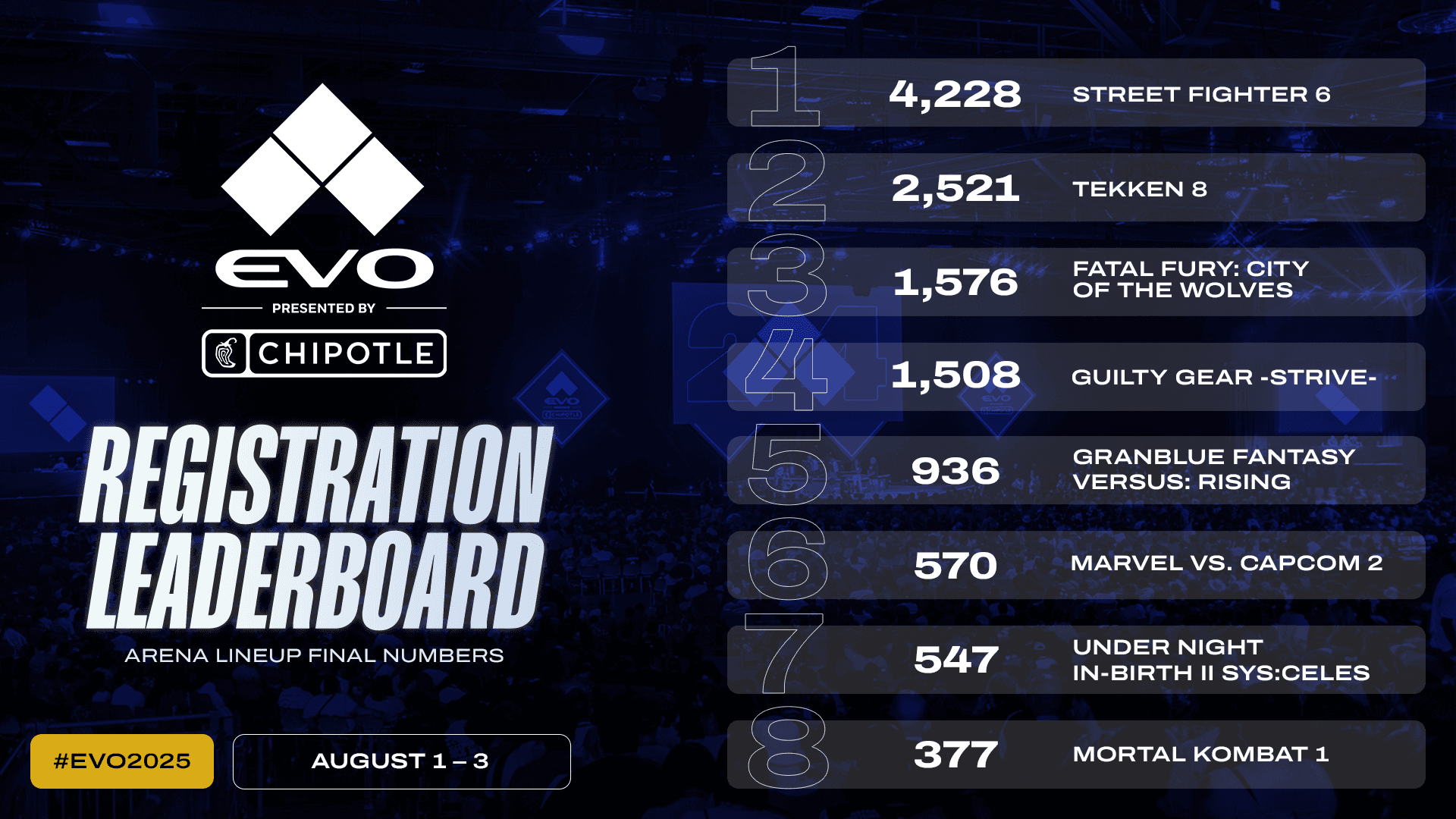
The year 2025 was less a chapter in the history of the Fighting Game Community (FGC) and more a structural realignment. It served as a stark demonstration that in the competitive landscape, pedigree alone is insufficient. Success requires three fundamental elements: strategic publisher support, compelling gameplay complexity, and, critically, operational stability. The season saw certain titans falter, victims of developer neglect or organizational ambiguity, while newcomers, backed by aggressive investment, rapidly carved out dominant niches.
The Architects of Success: FGC Titles That Executed in 2025
The titles that thrived this year succeeded by offering a compelling product and backing it with significant, structured esports ecosystems. They understood that players follow money and stability.
Fatal Fury: City of the Wolves (The Calculated Comeback)
SNK’s return to the *Fatal Fury* franchise was perhaps the most compelling narrative success of 2025. Leveraging two decades of anticipation, *City of the Wolves* delivered mechanically sound gameplay that satisfied the core FGC demographic. Crucially, SNK did not rely solely on nostalgia.
The game’s competitive calendar was aggressive and exceptionally well-funded. Receiving the Best Fighting Game award at The Game Awards was a formality, but the tangible proof of its success lay in the prize structure: a staggering $2.5 million SNK World Championship solidified the game’s status as a top-tier financial destination for professional players. This investment ensured the game wasn`t just played, but studied and mastered, injecting immediate, high-level rivalry into its scene.
2XKO (The Corporate Blitzkrieg)
Riot Games’ 2v2 fighter, *2XKO*, remains technically in Early Access, yet its impact on the FGC hierarchy was immediate and undeniable. Unlike many grassroots fighting game scenes, *2XKO* was born with an infrastructure designed for mainstream esports consumption.
Riot`s determination to integrate *2XKO* into their established, high-production esports circuit provided a stability that few new fighting games can afford. The complexity of its tag-team mechanics engaged high-level talent, and the promise of fully organized league play in 2026 provided professional players with a credible long-term career path. It is the textbook example of how operational excellence and sustained funding can rapidly build a competitive foundation.
Tekken 8 (The Resilient Juggernaut)
*Tekken 8* entered 2025 already dominant, yet its continued success was a testament less to flawless execution and more to unshakable community loyalty and superstar power. The game experienced significant friction following its Season 2 competitive update, which many high-level players criticized for overly simplifying core competitive mechanics.
Despite this self-inflicted wound, *Tekken 8* maintained impressive viewership figures at major events like Evo. The narratives driven by players like Arslan Ash—who further cemented his legacy with multiple major wins—proved too compelling to ignore. The strength of the established King of Iron Fist storyline, combined with the sheer depth of the player base, allowed *Tekken 8* to weather questionable development choices. This is the definition of a franchise succeeding on momentum when internal decisions might suggest otherwise.
The Cost of Compromise: FGC Titles That Faced Setbacks in 2025
The flip side of 2025’s success stories were the games that struggled. Their challenges often stemmed from a disconnect between developer vision, community expectations, and organizational support.
Mortal Kombat 1 (The Design Detriment)
The removal of *Mortal Kombat 1* from the Evo 2026 lineup served as the definitive structural consequence of 2025 for NetherRealm Studios. This exclusion was not surprising to observers. The core issue lay in competitive adoption: the game’s revised mechanics and fighter movesets, while appealing to a casual audience, failed to maintain sufficient competitive interest.
When high-profile tournaments struggle to achieve necessary signups, the title’s esports viability is compromised. The community pointed fingers directly at developer slowness in addressing meta-game balance and the unpopular alterations to the game`s fundamental competitive loop. For a legacy series like *Mortal Kombat*, its competitive scene effectively received a public notice of obsolescence.
Super Smash Bros. (The Nintendo Paradox)
The *Super Smash Bros.* scene, encompassing both the highly competitive *Melee* and the popular *Ultimate*, has always operated on an organizational tightrope. In 2025, that rope frayed further.
The community`s passion remains legendary, often keeping the games relevant despite perpetual challenges: perpetually low prize pools and the complete organizational apathy of the IP holder, Nintendo. The core problem intensified late in the year when Nintendo dramatically slowed the approval process for licensing the games to major tournament organizers. This bureaucratic bottleneck led to long-running, crucial majors—cornerstones of the scene—being forced to announce 2026 lineups with no *Melee* or *Ultimate* presence. The FGC is left watching a highly dedicated community struggle against its own creator’s reluctance to acknowledge their competitive legitimacy.
MultiVersus (The Self-Cancellation)
The platform fighter *MultiVersus* offers the clearest cautionary tale of 2025. Once hailed as a potential «Smash killer,» the title ceased operations and took its servers permanently offline in May. Its short esports run was characterized by optimism followed by sharp developer missteps.
The game possessed a strong IP library and an engaged, albeit small, competitive scene. However, developer decisions—including locking characters and intermittent communication—were perceived as actively hindering community and competitive growth. *MultiVersus* proved that even aggressive early fanfare and strong backing cannot compensate for flawed execution and an inability to maintain player trust through early access.
Conclusion: A More Professional, Less Forgiving Future
The 2025 FGC season highlighted a critical threshold: the era of purely grassroots dominance is giving way to professionalized, publisher-backed ecosystems. Titles that succeed in the future must not only capture player imagination but must also guarantee substantial prize money and logistical stability.
The success of *Fatal Fury* and *2XKO* demonstrates the power of focused investment, while the struggles of *Mortal Kombat 1* underscore the severe cost of competitive design errors. As the FGC heads into 2026, the competitive stakes are higher, the infrastructure requirements are more stringent, and the window for error is increasingly narrow.
 Elton Marrow