

The transition of the Grand Slam Finals to South Africa marks a significant milestone for the Freestyle Chess format. Unlike conventional tournaments, this event has adopted a dual-venue structure, separating the rigorous competitive play from the public facing activities.
The Kick-Off: Press and Pioneers
The event formally launched on December 4 with a press conference held at The Silo Hotel in Cape Town. This session was essential, providing the sole scheduled opportunity for direct engagement with the co-founders, most notably World Champion and chess innovator, Magnus Carlsen, alongside Jan Henric Buettner.
The focus of the press conference underscored the league’s goal: to push the boundaries of competitive chess. The presence of Carlsen and Buettner highlighted the serious intent behind the Freestyle Chess brand, cementing its status not merely as an exhibition, but as a critical part of the modern chess circuit.
Diving Chess: The Aquatic Anomaly
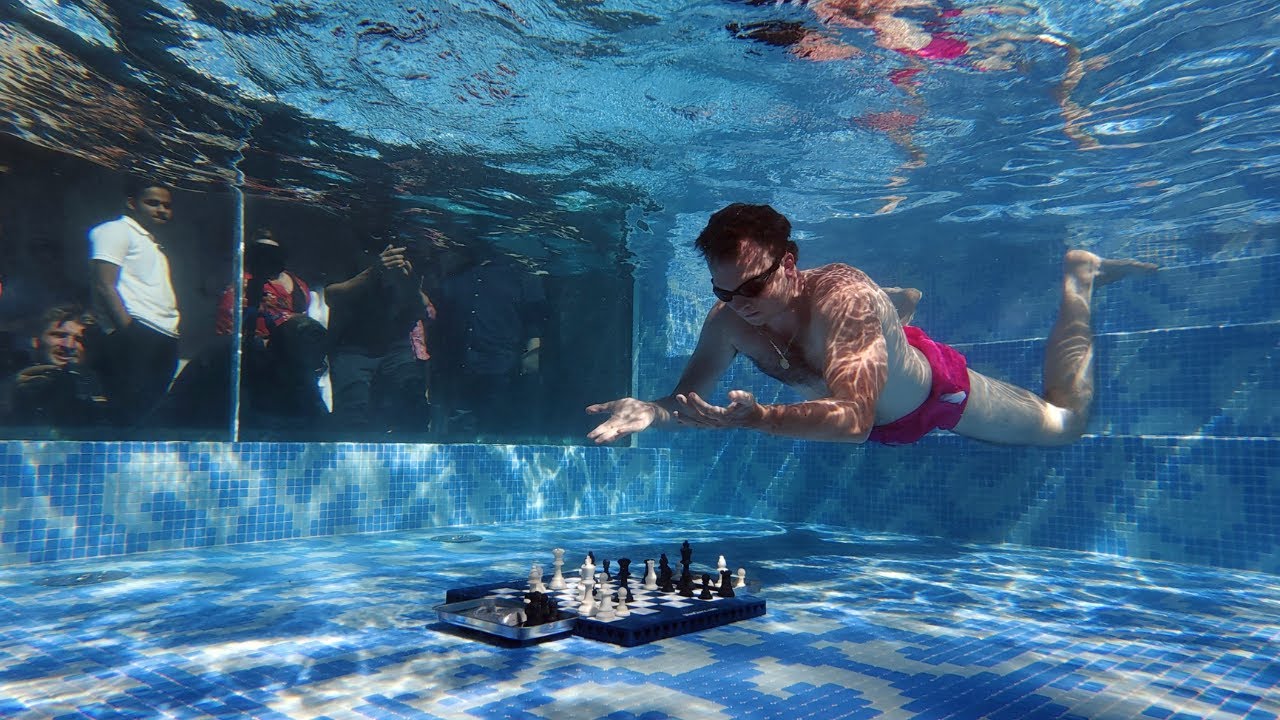
Immediately following the press conference, the program pivoted to one of the tournament’s more peculiar and intriguing elements: Diving Chess. This underwater variant, developed by Etan Ilfeld, involves competitors playing chess while submerged—a concept that lends itself perhaps more to cinematic absurdity than classical strategy, yet perfectly captures the innovative spirit of Freestyle Chess.
World Diving Chess Champion Michal Mazurkiewicz was on site to offer technical support and guidance to the elite grandmasters, who presumably had to quickly adapt their mental calculations to include factors like breath-holding and hydrostatic pressure. While not a structured media event, the concept serves as an excellent piece of technical theater, emphasizing that this competition is fundamentally distinct from standard FIDE-rated events. It is a calculated move to inject levity and spectacle into the often-stoic world of competitive strategy.
Exclusivity vs. Accessibility: The Tale of Two Venues
The competitive segment of the Grand Slam Finals is hosted at the Grootbos venue. It is crucial to note the technical designation of this location: it is a closed site. Freestyle Chess explicitly maintains a strict policy of no ticketing or public access to the tournament venue itself, ensuring an environment free from external disruption for the competing grandmasters.
However, the organizers have made substantial efforts to connect the tournament with the local South African chess community:
- Local Engagement: Several finalists were scheduled to visit the University of the Western Cape to meet with players from local Cape Town chess clubs, fostering direct interaction between the world’s elite and grassroots strategy enthusiasts.
- Welcome Reception: A formal Welcome Reception was scheduled for December 5 in Stanford, dedicated to students and regional representatives.
The Public Hub: V&A Waterfront
For the general public and international visitors, the V&A Waterfront serves as the designated central hub for the duration of the finals (December 8–11). This waterfront location transforms into a live viewing center, offering free access to the official broadcast streamed directly from Grootbos.
The viewing experience is professionally managed, featuring South African presenters Cato Louw and Adrian Endly, alongside Grandmaster Vidit Santosh Gujarathi. This team guides fans through every round, providing real-time analysis and commentary. The Waterfront provides the vital bridge between the exclusive competitive setting and the global audience, allowing Cape Town residents and visitors to feel integrated into the «Grand Slam» atmosphere without disrupting the tournament flow at Grootbos.
The Freestyle Chess Finals are proving to be a logistical exercise in managing high-level competition alongside viral marketing opportunities. By placing the actual competition behind closed doors while emphasizing eccentric public activities like Diving Chess and centralized viewing parties, the event successfully maximizes both athletic focus and media impact. The resulting narrative is one of innovation, high stakes, and a distinctly modern approach to one of the world`s oldest games.
 Elton Marrow